Last Thursday, Silicon Valley billionaire Peter Thiel gave a speech at the republican convention, endorsing Donald Trump. The Economist calls him corporate Nietzschean.
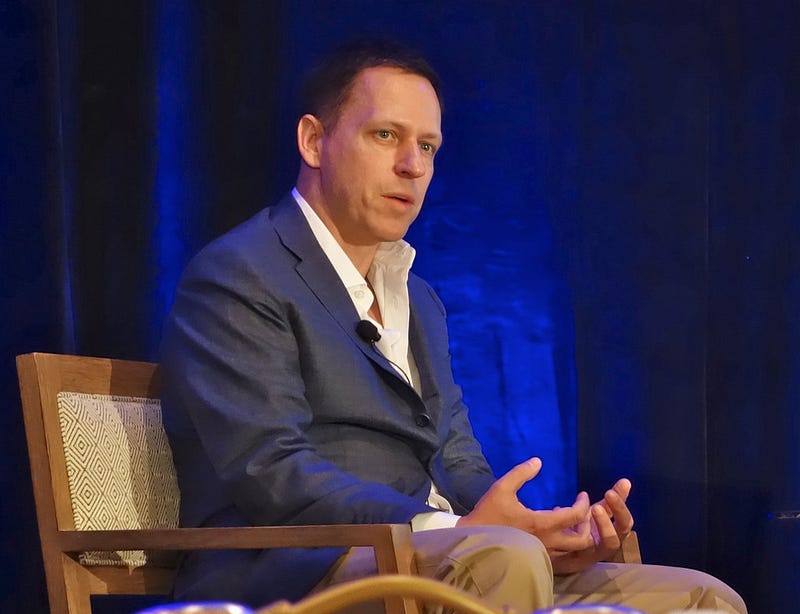
Photo: Steve Jurvetson
This sounds like a better explanation for his support of Trump than presuming he wants to run for office himself. In 2009, he said: "I no longer believe that freedom and democracy are compatible." As an hard core libertarian, he'd obviously choose his version of freedom over democracy. Trump's rise has already all but destroyed one party. His presidency could blow up democracy as we know it.
One of the many other controversial things Thiel has come up with, is paying people to drop out of college and start a company. Over beers with friend, I was wondering whether this could become government policy. Neither libertarians like Thiel nor public education fans would find this immediately appealing, but hear me out.
Higher education is expensive. Asking the students to pay for it leads to student debt. It also makes it less likely that people from a poor background will start university. One answer is to make higher education free. It sounds attractive, but it would be a huge subsidy to the future rich.
Paying people who do not go to college is an effective way to neutralize this subsidy. If you can't or won't go to college, the state would pay you a fixed amount of money. I imagine the amount to be around US$ 25 000 or the average debt after college. If you do go to college, you won't get the money, but you'll get a free education.
You might ask, isn't the average 18 year old incapable of making this type of life altering decisions. I have my doubts too, but that's already happening. An 18 year old deciding whether to go to college, won't weigh student debt very much. That's future me. I'll never be 23. Having that money around up front, makes the choice a lot clearer.
The Zappos hiring process takes a month of training and education. After that month, the new employee is offered a cheque for US$ 2000 to not take the job. This weeds out the doubters and non-believers. It also makes it harder to quit later on. By not taking the money, you accept that your employment is worth at least US$ 2000. Quitting later on means giving up on that money.
For education something very similar would happen. If you are US$ 25000 in debt and you drop out of college, well, you're still in debt by the same amount, only now you might get a job to climb out. If you turned down a US$ 25000 cheque to go to college, dropping out psychologically costs you that amount of money. It might not be fully rational, but that is how our brains work.
Paying people not to go to college would neutralize the huge subsidy to the rich that higher education is today. It would make the go/no go decision for young people more rational. Arguably too many people are going to university. The ones that do, too often study the wrong thing. Finally it would help keep students from dropping out and help them finish their studies successfully.