Blog

Running since 2003. Posts about software, travel, and whatever else.
The Web of Babel: Browsing the Internet's Latent Space

The Web of Babel: Browsing the Internet's Latent Space

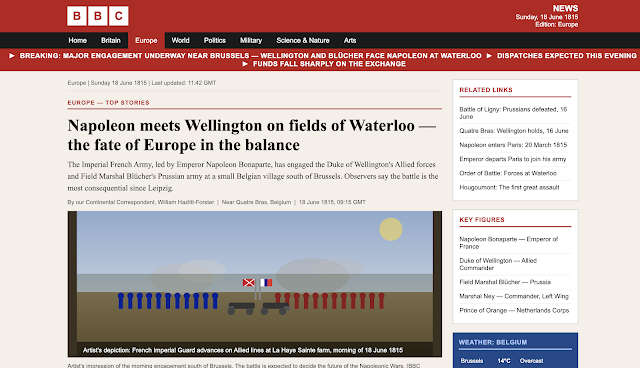
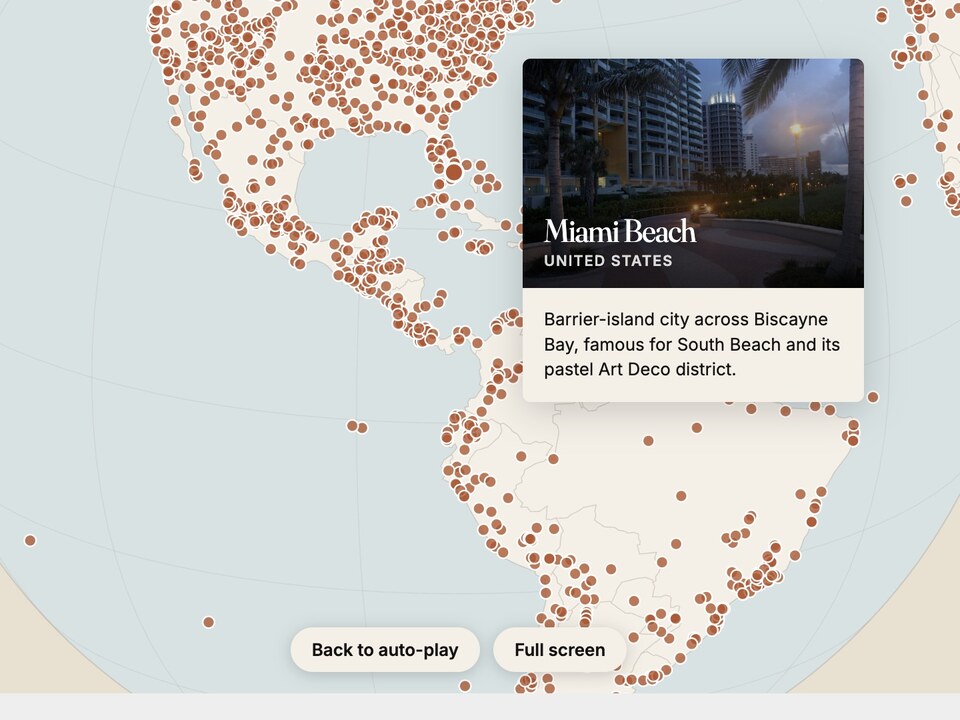
What if every URL you could imagine already existed somewhere? Buried inside an LLM is a compressed model of the web it was trained on, where the BBC's coverage of Waterloo waits to be rendered alongside hallucinated Hacker News and a GeoCities crystal page complete with blink tags. Borges built a library; this is the browser for its web.

Wanting to be an astronaut turned me into a Software Engineer

Wanting to be an astronaut turned me into a Software Engineer

Astronaut: too much pilot training. Astronomer: too many night shifts. But simulating planet formation on an 8-bit home computer? That sounded perfect, even if the first attempt could barely manage 25 rocks. A childhood dream, a detour through compilers and geohashing, and what happens decades later when you hand the same problem to a coding agent over a weekend.

The High Cost of Free Testing

The High Cost of Free Testing

An unpopular opinion: most of the tests in your codebase have negative value, and you should be deleting them rather than writing more. The effort of writing them used to keep the suite honest. Now an agent can churn out a thousand in minutes, and the math no longer works. A case for why free testing is the expensive kind.

We're all idiots and that's fine

We're all idiots and that's fine

Three sentences, learned in order, that change how you see the world: you are an idiot, everybody is an idiot, and it is fine. Skip a step and you end up a freeloader, a narcissist, or worse. Get all three and something useful happens. A short framework, worked out over a beer, for empathy and stubborn optimism in roughly equal measure.

Simplest election model gives Kamala 55%

Simplest election model gives Kamala 55%

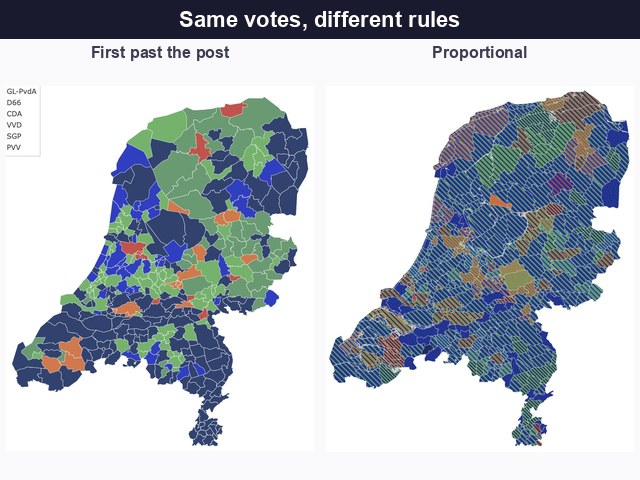
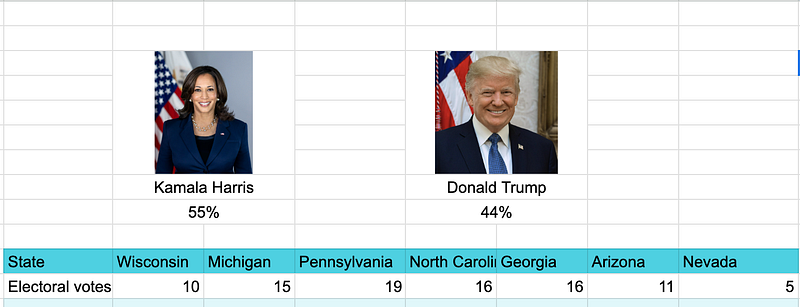
538, the Economist, Nate Silver: serious election models with serious math, all landing in roughly the same place for 2024. What happens if you skip the modeling entirely, take the seven swing states, and just flip a coin for each? There are 128 outcomes to enumerate in a spreadsheet. The number that falls out is suspiciously close to what the experts say.

Founder mode is wishful thinking

Founder mode is wishful thinking

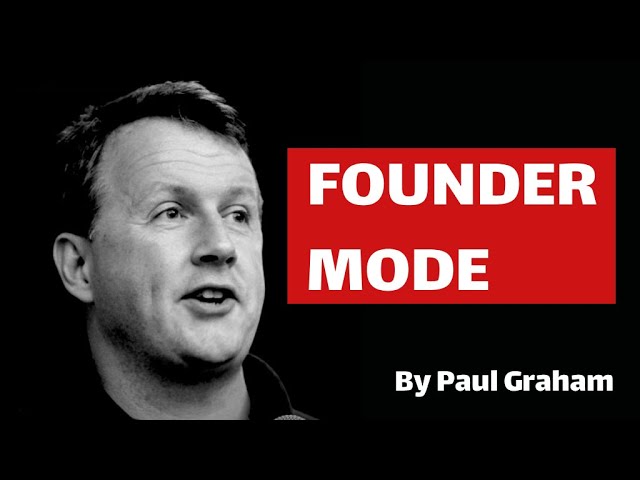
Paul Graham's latest essay says founders should run their companies in 'founder mode' rather than degenerating into managers. The catch: nobody, including Paul, can quite say what founder mode is. The two patron saints offered as evidence are Brian Chesky of Airbnb and Steve Jobs. A closer look at the stock charts, and at Jobs' actual record as a founder, complicates the story considerably.

Taxes and Human Development in US States

Taxes and Human Development in US States

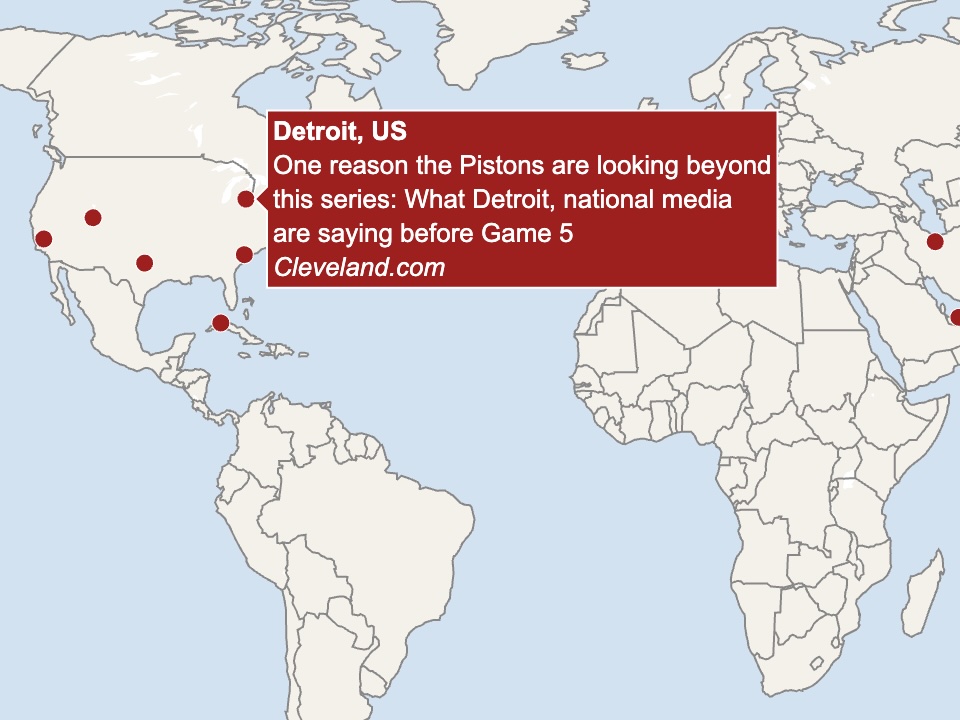
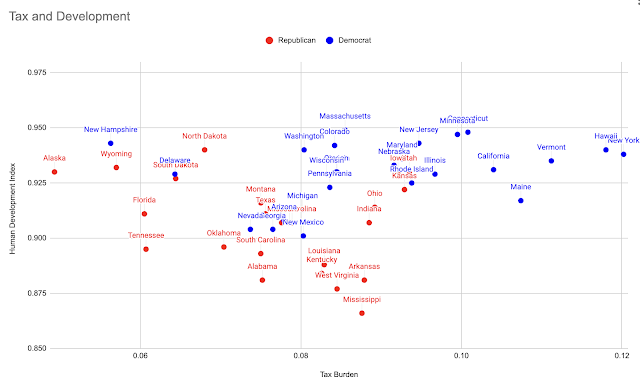
Death and taxes, Franklin said, are the only certainties. The US version adds a third: that you can pay high taxes for a good life or low taxes for a worse one, take your pick. Plotting Human Development Index against state tax burden, with a dash of red and blue, says otherwise. Two states in particular refuse to sit where the theory says they should.

YC Companies in a spreadsheet

YC Companies in a spreadsheet

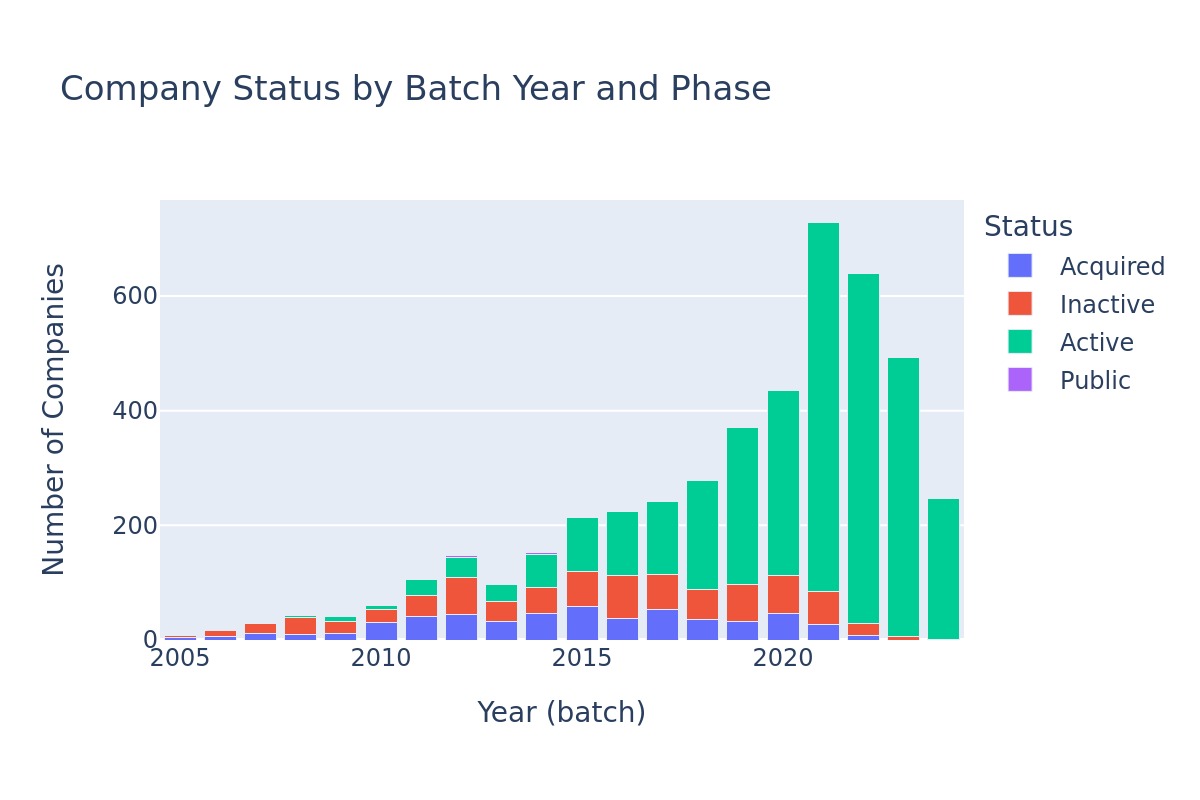
Try to find an up-to-date list of every YC-backed company and you'll come up empty. So I wrote a scraper, dumped the lot into a spreadsheet, and started slicing. Among the surprises: which sector has nearly double the success rate of one that sounds far more inspiring, the most popular pre- and post-fixes for startup domains, and what gethealth.com is currently asking.

Lies, statistics and the ultra rich

Lies, statistics and the ultra rich

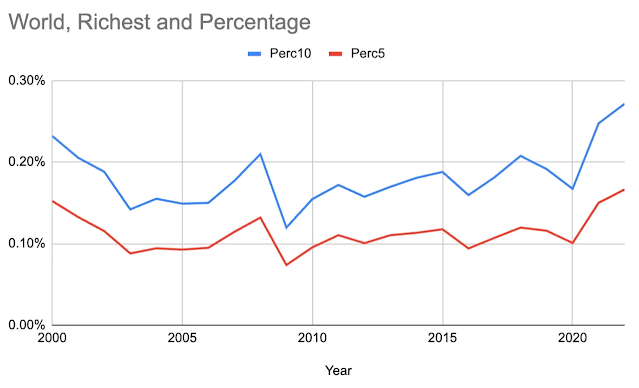
Every Davos, Oxfam releases a report on how the rich got richer and the poor got poorer, and the headlines write themselves. This year: the world's five richest men have doubled their money since 2020. The sources are reputable, so I went and read it. The framing turns out to be doing a lot of work, and the actual share-of-global-wealth chart since 2000 tells a different story.

Neptyne now offers free access to 5 APIs

Neptyne now offers free access to 5 APIs

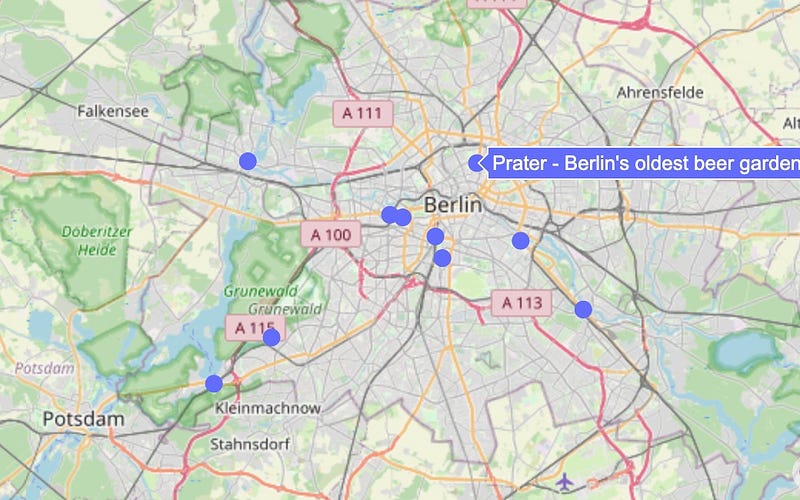
Two weeks after opening up free ChatGPT calls inside Neptyne, we threw in four more APIs that normally demand registration, payment, and the usual token dance. No keys, no headers, no signup — just call them from a spreadsheet cell. There is even a tyne that finds beer gardens by stitching four of them together, which felt like the obvious demo.

Automate Research with a Neptyne Spreadsheet and OpenAI

Automate Research with a Neptyne Spreadsheet and OpenAI

LangChain, AutoGPT and BabyAGI promise autonomous research bots, but actually wiring one up means deployment, glue code, and a long Saturday. What if the whole thing fit in a spreadsheet? You type a query in C2, list the columns you want in row 4, hit Go — and rows of AI startup funding news start filling themselves in. The pipeline behind that button is shorter than you would guess.

Visited Countries as a Neptyne Spreadsheet

Visited Countries as a Neptyne Spreadsheet

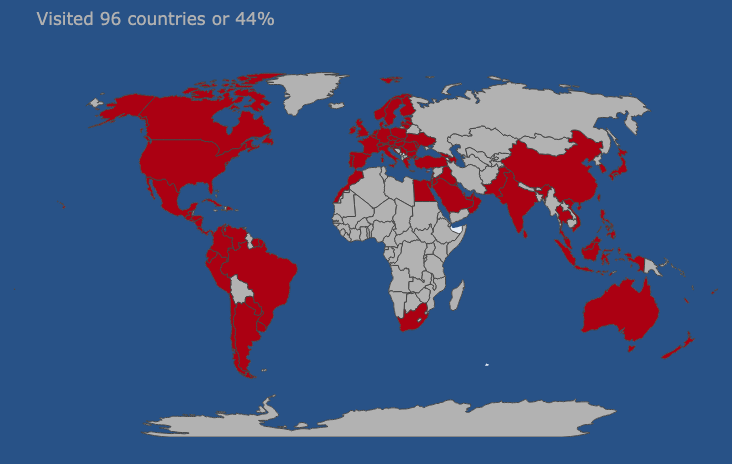
Long before this blog had real hosting, the first thing I built that went viral lived on a desktop in our office broom closet, attached to a 2Mbs cable modem. We discovered it had taken off because of the noise the cooling fan made — shortly before the machine gave up entirely. Some years and several startups later, that same click-the-countries app is back, reborn as a spreadsheet.

Life expectancy and political affiliation

Life expectancy and political affiliation

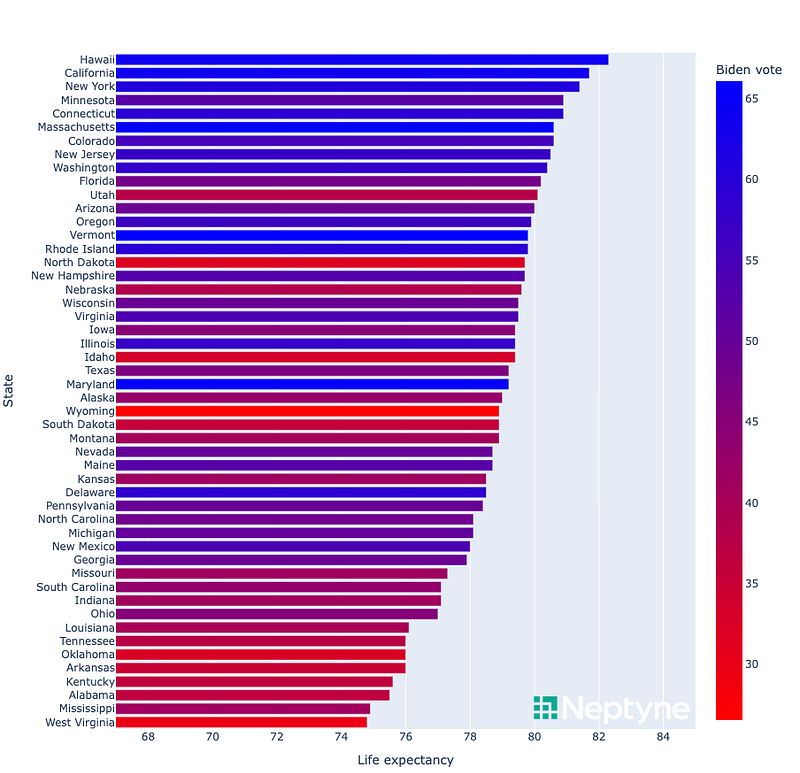
Hawaii has the longest life expectancy in the US — 82 — and went 63% for Biden in 2020. West Virginia sits below 75 and gave him 29%. The pattern is real and not subtle. But pull up the same chart for the 1960 Kennedy-Nixon race and the line tilts the other way. What changed, which states slid, and which climbed?

Using Neptyne to explore the population growth of the US States

Using Neptyne to explore the population growth of the US States

A spreadsheet has a grid. The US has a grid-ish arrangement of states. So what if the grid IS the map? Pull historical state populations off Wikipedia, color each state cell on a red-yellow-blue scale, and watch America rearrange itself. In 1790 New York is nobody special. By 1870 Indiana outweighs Texas, Florida and California combined. By 2020 the middle hollows out.

Predicting the outcome of the World Cup in 150 lines of Python

Predicting the outcome of the World Cup in 150 lines of Python

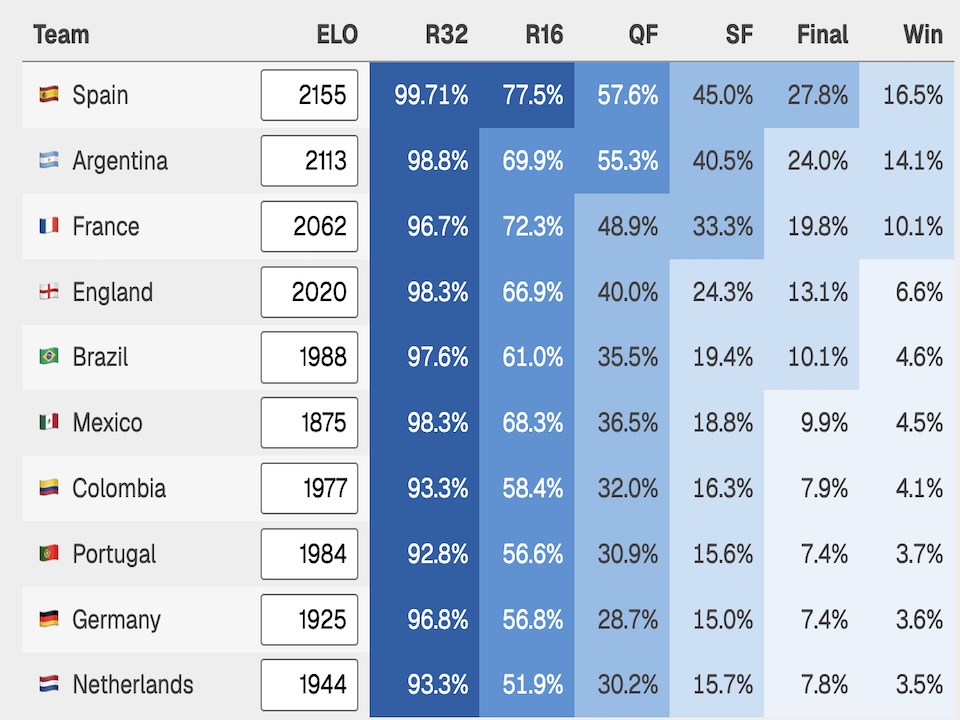
Everyone says you need deep learning to forecast a sports tournament. Do you, though? Armed with a Kaggle dataset of international matches going back to 1872, 150 lines of Python, and a spreadsheet, I had a go at predicting Qatar 2022 without any ML toolkit at all. The technique is embarrassingly simple — and Germany ends up ranked embarrassingly low.

Neptyne: Making Spreadsheets Programmable

Neptyne: Making Spreadsheets Programmable

It has been quiet around here — famous last words on any blog — but after a thousand-odd pull requests in stealth mode, here is what I have actually been building. Imagine the formula bar in Excel, except it speaks real Python. Loop through A1:C10 like a normal iterable, scrape Wikipedia for every country starting with S, drop emoji flags on them, all in fewer lines than this paragraph.

Automating Image Generation with Stable Diffusion

Automating Image Generation with Stable Diffusion

Why install Stable Diffusion locally when DreamStudio is right there in your browser? One reason: batch jobs. I asked GPT-3 to pick the top tourist highlight for each of the fifty US states, dropped that into a CSV, and turned a bash loop loose on my graphics card overnight. The result is an AI travel guide to America. The Grand Canyon comes out fine. Some of the smaller states get weird.

Use DALL-E to create infinite zoom movies

Use DALL-E to create infinite zoom movies

DALL-E can fill in transparent pixels around an image, which raises an irresistible question: what if you just keep zooming out forever? Start with a Van Gogh, erase the edges, ask DALL-E what was around it, repeat. Fourteen frames later you may not be looking at a painting anymore — you may be looking at cats looking at Starry Night. Here is the tooling, and a warning that the loop sometimes goes pleasantly off the rails.

Visualizing Poetry using DALL-E

Visualizing Poetry using DALL-E

A weekend experiment: feed a poem to DALL-E line by line, but pair each poet with a painter from roughly the right era so the slideshow holds together. Robert Frost gets Edward Hopper. Langston Hughes gets Jacob Lawrence. Shakespeare gets Rubens, and is a little full of himself. DALL-E refused to render one word in the sonnet, which led to an unexpectedly elegant workaround involving a skeleton.

Tool building organizations

Tool building organizations

Hashtags, retweets, Wikipedia infoboxes — nobody asked a product manager to invent them. They emerged from communities tinkering with plain text until conventions hardened into features. So why did Tim Berners-Lee's tidy Semantic Web flop while Wikipedia accidentally built one? And what should organizations actually steal from this messy, bottom-up magic?