Blog

Running since 2003. Posts about software, travel, and whatever else.
The Clever Bit and the Gold Rush

The Clever Bit and the Gold Rush

The California 49ers didn't win because they were brilliant pan-handlers — they won because they got there first and planted a flag. A follow-up to last week's worry that tech is running low on clever bits: maybe that's fine. When every company is a tech company, the game stops being about who is smartest and starts being about who shows up with a shovel.

What's the clever bit?

What's the clever bit?

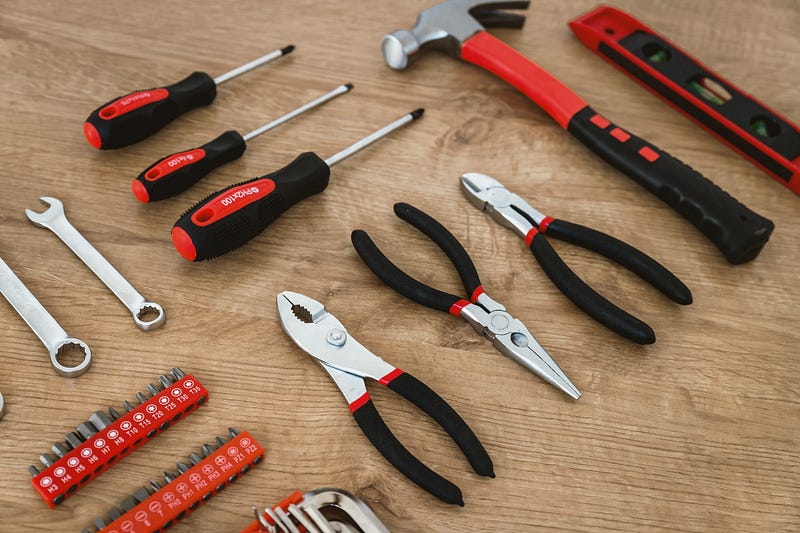
Pitch Douwe your startup and he will ask one question first: what is the clever bit? Not the problem, not the market size — the unique insight nobody else has had yet. Anyone can spot a problem. Being better at solving it than everyone else is the actual game. Also: four years at Sidewalk Labs ended on December 31st. Something new is brewing.

Toolmakers and Tool Users

Toolmakers and Tool Users

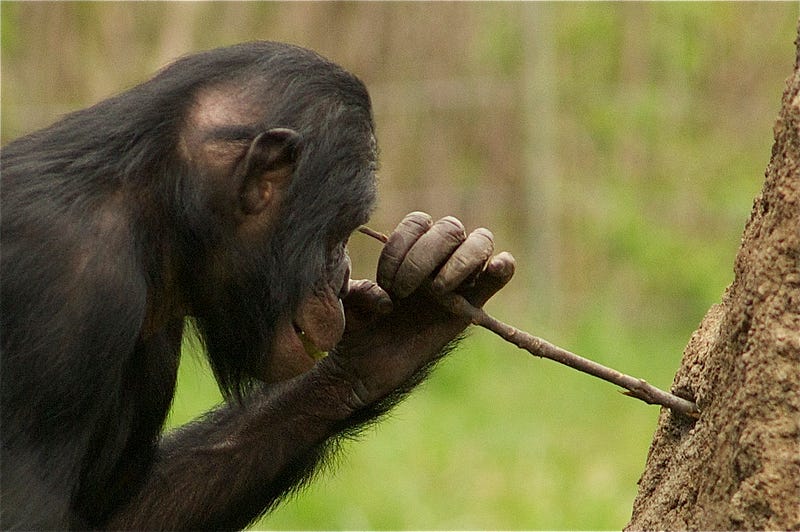
A chimpanzee in need of a tool rips a branch off a tree and sharpens it with its teeth. It does not drive to Dick's Sporting Goods. That, more or less, is the superpower the Industrial Revolution took away from us. The data economy might quietly hand it back — assuming Steve Jobs and his locked-down iPhone haven't won permanently, which Douwe argues they haven't.

Deep Travel: AI as a Travel Writer

Deep Travel: AI as a Travel Writer

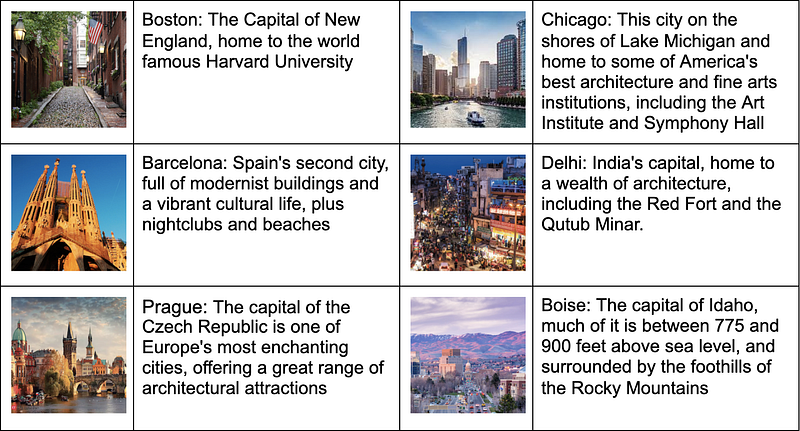
Two failed travel startups later, GPT-3 shows up. Naturally Douwe asks: can it just write the guidebook? Feed it Wikivoyage and you get dry facts. Feed it Lonely Planet and the prose starts flirting with you. Feed it a bragging backpacker and things get weirdly personal. It also confidently invents a hotel that doesn't exist and sends skiers to Lanzarote. Travel writing has never been so creative.

Visualizing Sea level rise

Visualizing Sea level rise

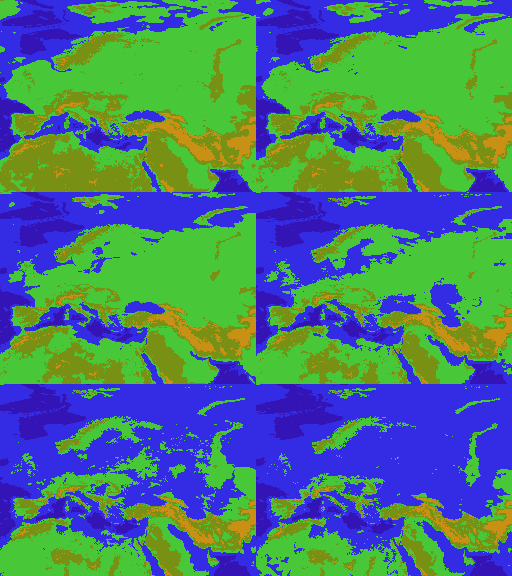
Fifteen years ago a GIF of a flooded Europe was enough to qualify you as a data wizard. MapBox finally shipped global elevation, so the obvious follow-up: nine 8K maps of the whole planet drowning, colored by who actually lives in the path of the water. How many people already live below sea level — and where does the next ten meters of ocean go first?

People Watching on the Wikipedia

People Watching on the Wikipedia

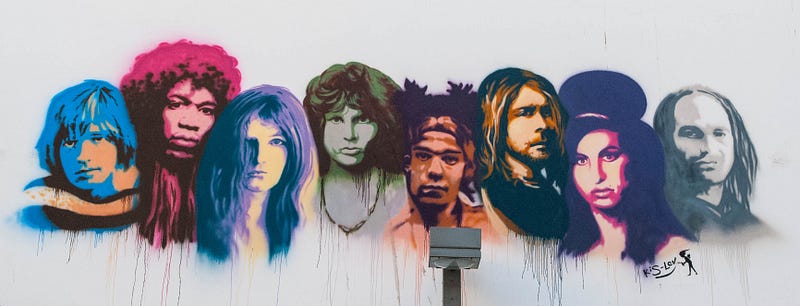
Do rock stars really die young? Pull a million people out of Wikipedia, group them by occupation, see what shakes out. The first table says rappers die earliest and billionaires latest — but that is mostly survivorship bias dressed up as insight. Filter to anyone born before 1924 and the real patterns emerge: who outlives whom by four years, who squeezes an extra year on the other party, and who really should not have become an aviator.

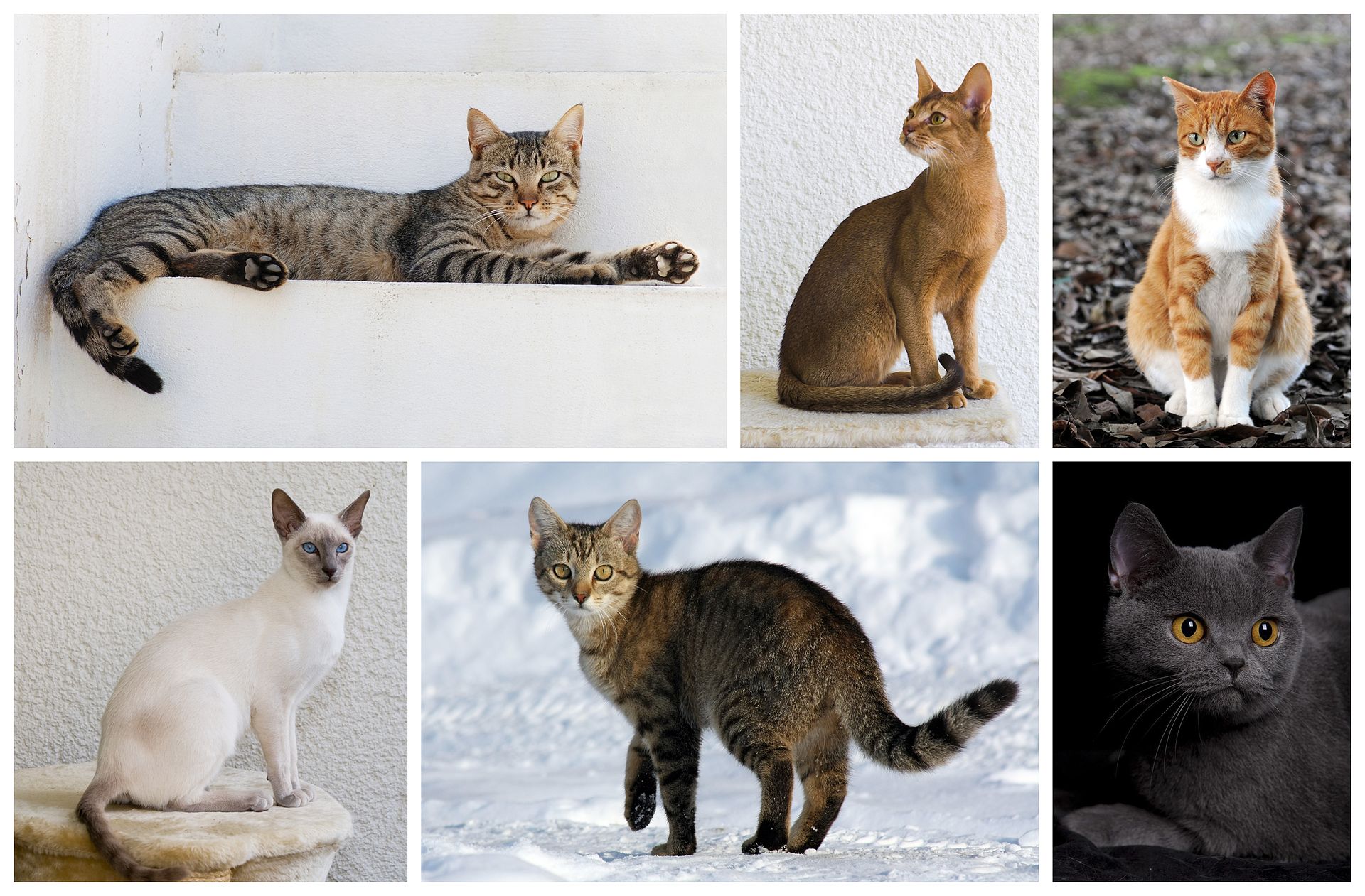
The scariest cat you'll see this Halloween

The scariest cat you'll see this Halloween

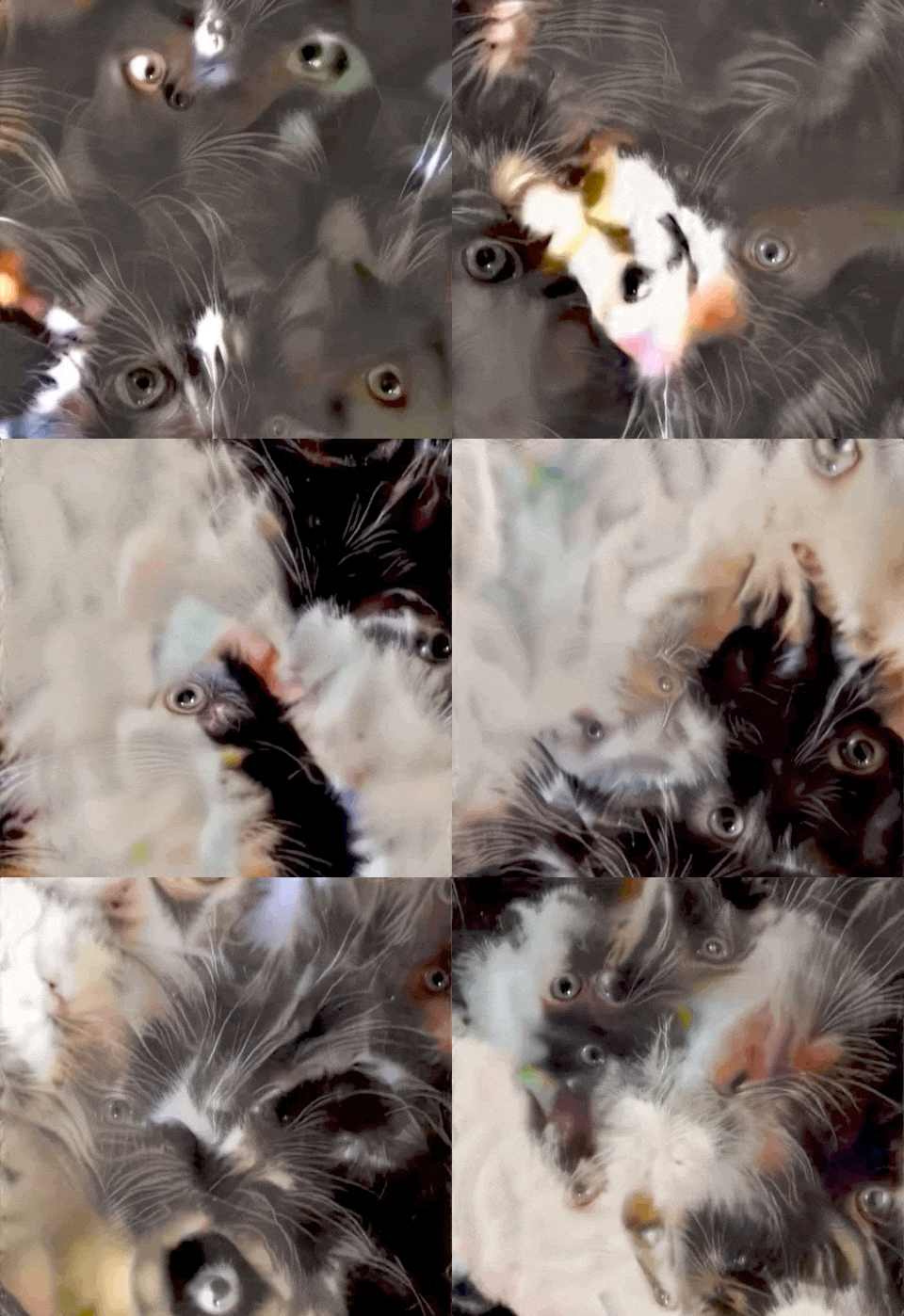
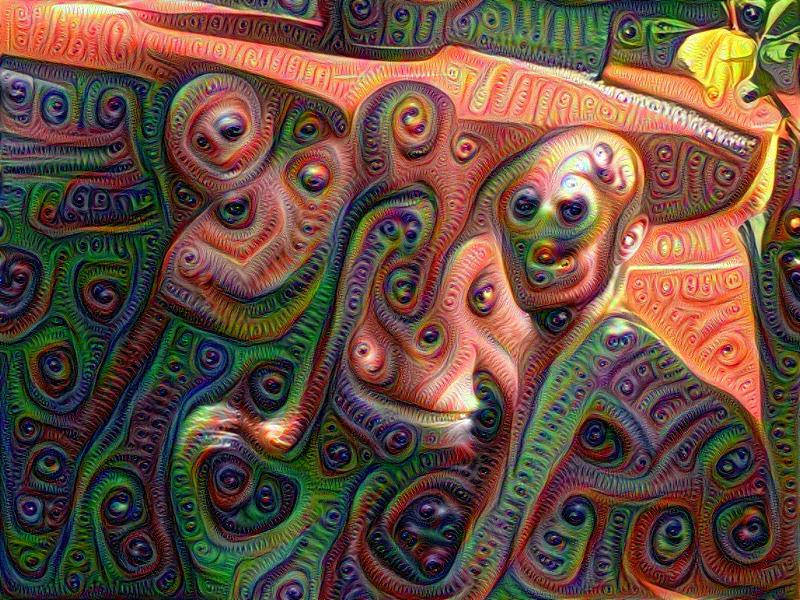
The Cat Sith roams Samhain demanding saucers of milk, so a Halloween cat felt in order. Style transfer normally borrows Van Gogh and lends him Tubingen — but ask a neural net to hallucinate pure catness from noise and zoom in forever, and things get less cute. There is no smooth way to render a cat. Eyes, whiskers and fur keep tessellating into each other in ways the visual cortex strongly objects to.

Conway: A Cellular Automaton Tribute

Conway: A Cellular Automaton Tribute

John Conway died of Covid in April 2020, and reading about the Game of Life in a Dutch kids magazine called KIJK was half the reason Douwe ended up in computer science. So: a tribute. One thing always nagged though — those gliders and guns merrily violate conservation of mass. What if cells moved instead of dying? Add colors with random attraction rules, then try circular attraction where red chases blue chases green chases red.

Movie Recommendations

Movie Recommendations

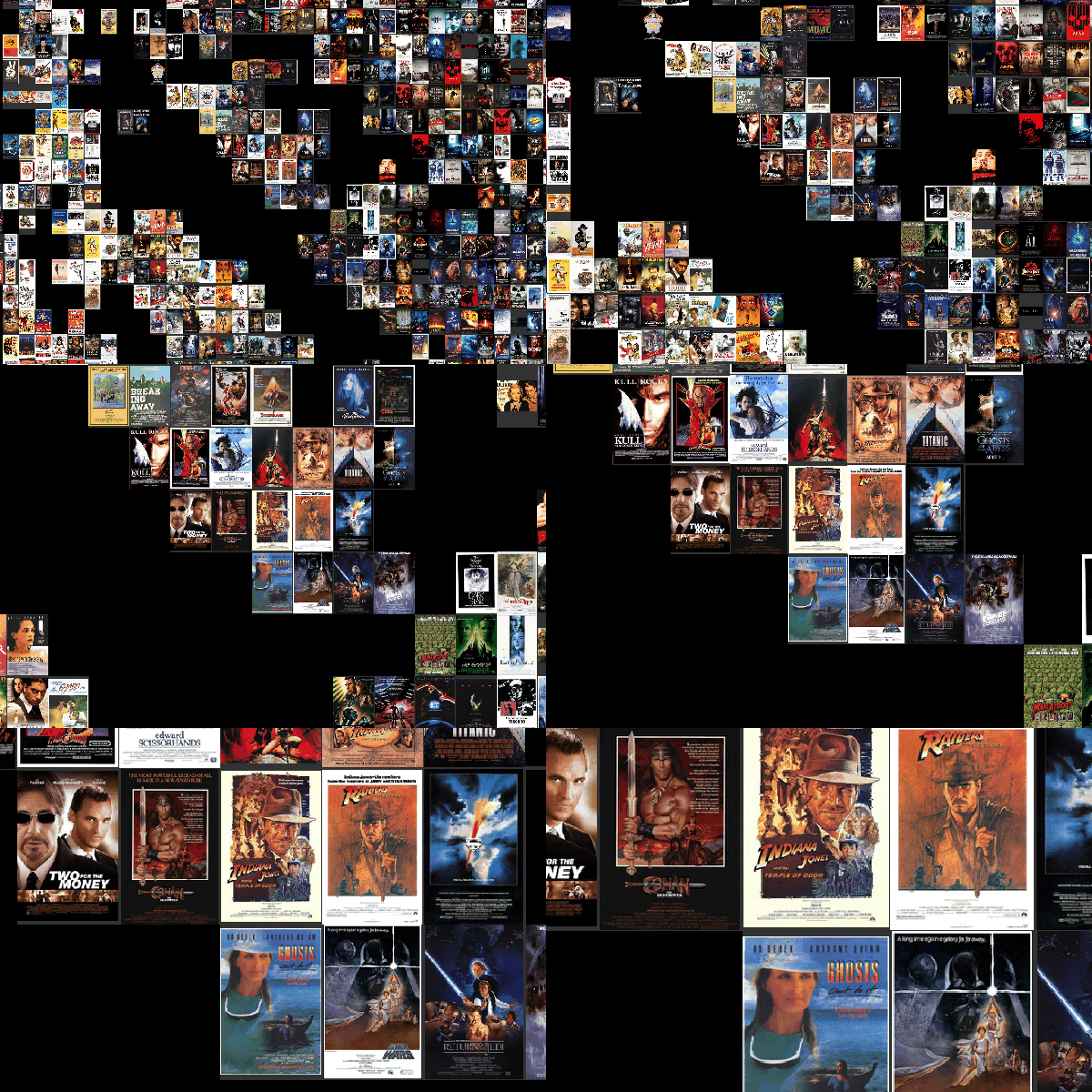
Another movie recommender? Sort of. This one never sees a single star rating. Instead it learns from the outgoing links of each film's Wikipedia article, on the theory that similar movies cite similar things. Whether that theory holds up, and what happens when you project the result onto a 2D plane of movie posters, is the fun part.

Amazon Dash and Philips Hue

Amazon Dash and Philips Hue

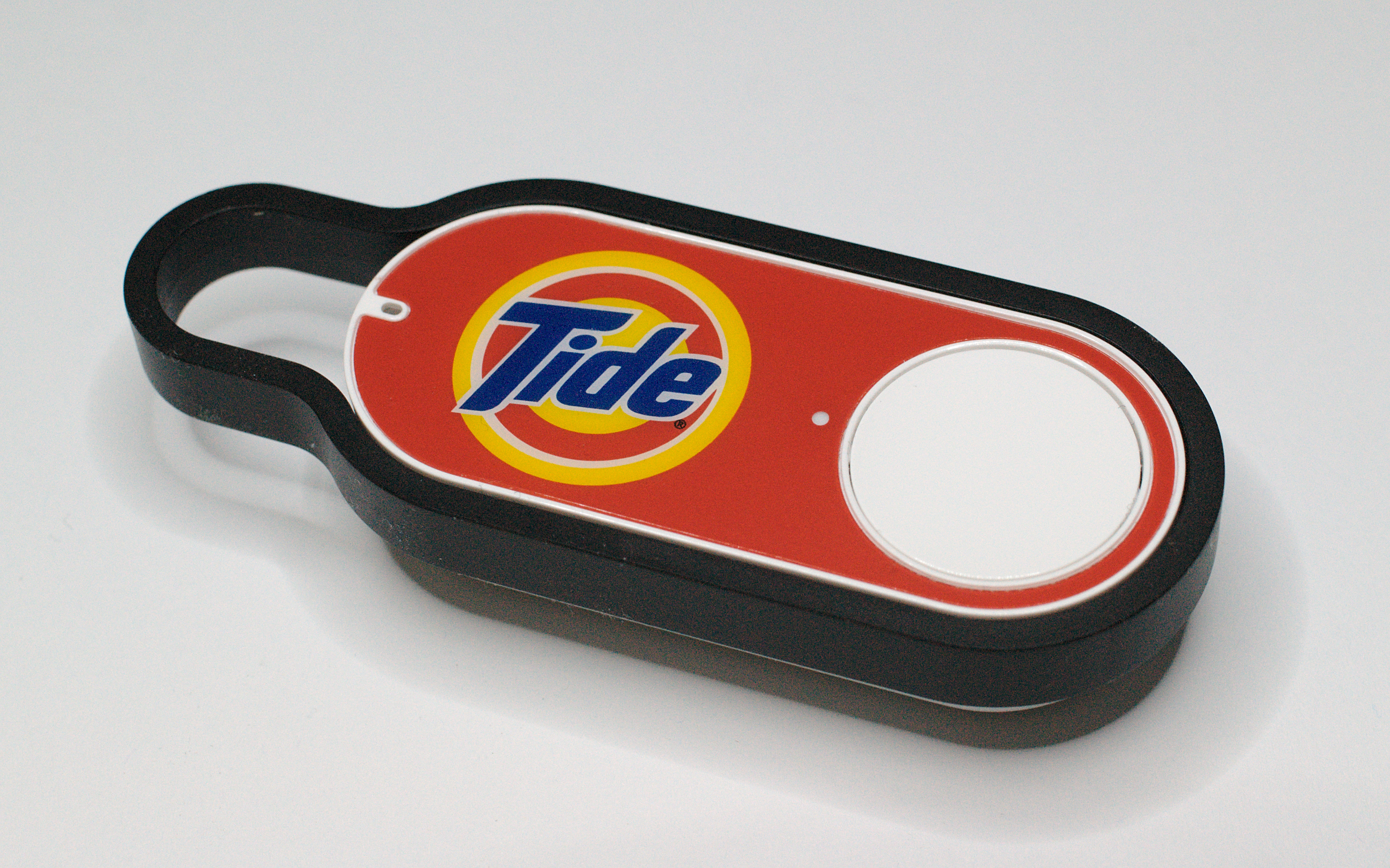
When Amazon Dash launched, I was sure it was an April Fool. A wifi button for ordering one specific product? But at $4.99 a pop, it turns out to be a perfectly good generic button for things Amazon never intended. Mine ended up tangled with Philips Hue and a small detective game involving the mac addresses of household phones.

Building a Reverse Image Search Engine using a Pretrained Image Classifier

Building a Reverse Image Search Engine using a Pretrained Image Classifier

Ten years ago, image search engines did not really search images at all -- they read the text around them and hoped for the best. The modern approach usually involves perceptual hashing, but there is a lazier trick borrowed from Word2Vec that works on pictures, too. The hardest part, it turns out, was not the algorithm.

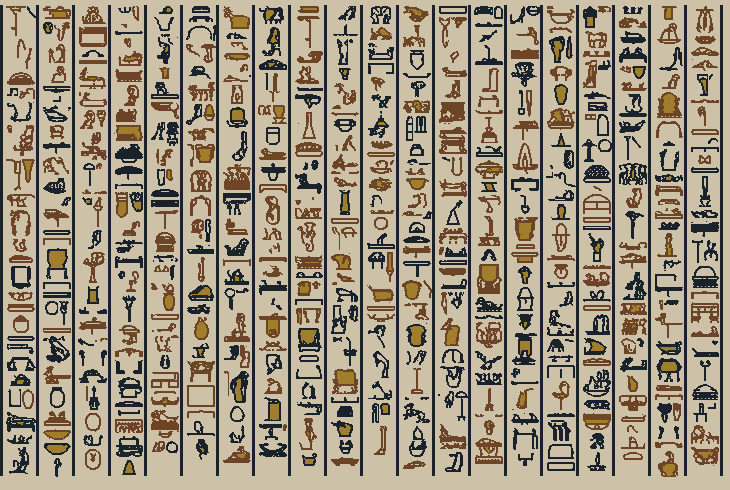
Learning to Draw: Generating Icons and Hieroglyphs

Learning to Draw: Generating Icons and Hieroglyphs

They say if brute force does not work, you are just not using enough of it. For an 8x8 grid, however, even my laptop would take three times the age of the universe. So I asked a recurrent network to draw icons instead, and someone took one look at the results and asked an unexpected question that sent the whole project sideways into ancient Egypt.

Deep Ink: Machine Learning fantasies in black and white

Deep Ink: Machine Learning fantasies in black and white

Deep Dream finds eyeballs in clouds, which is fun but also extremely literal. What happens if you tie the network's hands much harder -- one blob of black ink on white, no shades of gray, no continuous nudges, only pixels flipping one way or the other? The network has to pick up a pen, and the animated gif of what it does next is worth a look.

Building Spotify's Song Radio in 100 lines of Python

Building Spotify's Song Radio in 100 lines of Python

Pandora paid actual humans to rate songs along 450 musical dimensions. That is expensive, even when the humans are underpaid musicians. If you treat song IDs as words and playlists as sentences, what does Word2Vec make of it? The answer turned out to fit in under a hundred lines of Python -- assuming you do not count the part where you have to talk Spotify into giving up its playlists.

Four reasons that 2016 was a great year

Four reasons that 2016 was a great year

Facebook says 2016 was the worst year ever. Facebook is also an echo chamber, which is the thing Facebook itself says we should be worried about. Fighting echo with facts, here are four reasons it may have been quietly one of the best years on record -- including one statistic about Indian roads that should probably reorder a lot of charitable priorities.

Calculating the set of universal numbers

Calculating the set of universal numbers

Frederick II reportedly tried to find the universal human language by raising children in total silence and seeing what they spoke. It did not go well for the children. A gentler experiment uses Wikivoyage phrasebooks, the numbers one through ten, and an edit distance older than the microprocessor -- and produces a language tree that lines up with the linguists more often than it has any right to.

The Jordan-Egypt Ferry

The Jordan-Egypt Ferry

Search the web for information about the Aqaba-to-Nuweiba ferry and you come away more confused than you started. The ticket said 11PM, the terminal said midnight, the boat left at 1AM, and at some point in the middle of the Red Sea an officer in white woke me up holding my own passport and asked me where it was. One more datapoint for anyone heading this way.

WorldSizer

WorldSizer

The Times World Atlas had these wonderful maps where countries were resized to match a statistic -- population, GDP, whatever. As a kid I assumed an artist drew them by hand. Turns out you can do it algorithmically with CIA Factbook data, some shared border points and a tug of war. The tricky part is keeping Sri Lanka from drifting into India, and keeping the Middle East from squashing Syria into Greece.

Styled Museums

Styled Museums

Prisma made neural style transfer a phone-app sensation, but the underlying paper is public and an open source version exists (only about 100x slower). What if you pointed it at the world's 100 most-visited museums and rerendered each building in the style of its most famous painting? Plus a detour into why Werner Koch maintained GnuPG on a postman's salary.

Introducing Karakame

Introducing Karakame

Tourists ruining your vacation photos? A new iOS app takes five shots three seconds apart, stabilizes them, and quietly makes the crowds disappear. Tried out on a statue of Bach in Leipzig with surprisingly clean results. Plus the linguistic confession that karaoke does not really mean empty orchestra, and a haar-cascade detour that did not pan out.