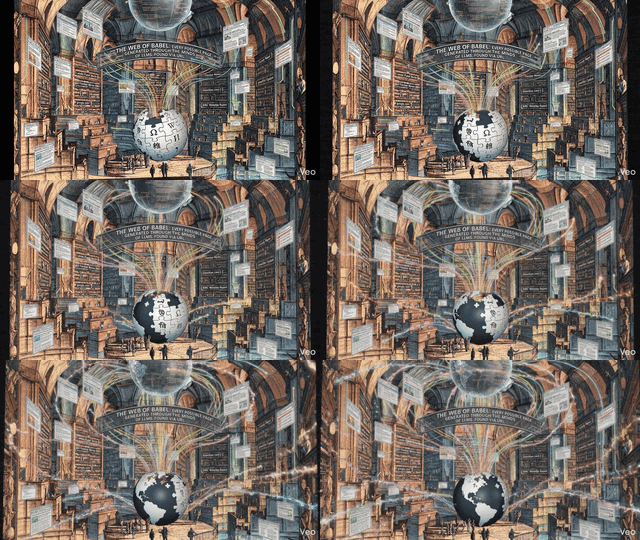
The Web of Babel
A browser for an internet that doesn't exist, inspired by Borges' Library of Babel. Type any URL and an AI hallucinates a plausible web page. Click links to keep browsing.
A browser for an internet that doesn't exist, inspired by Borges' Library of Babel. Type any URL and an AI hallucinates a plausible web page. Click links to keep browsing.
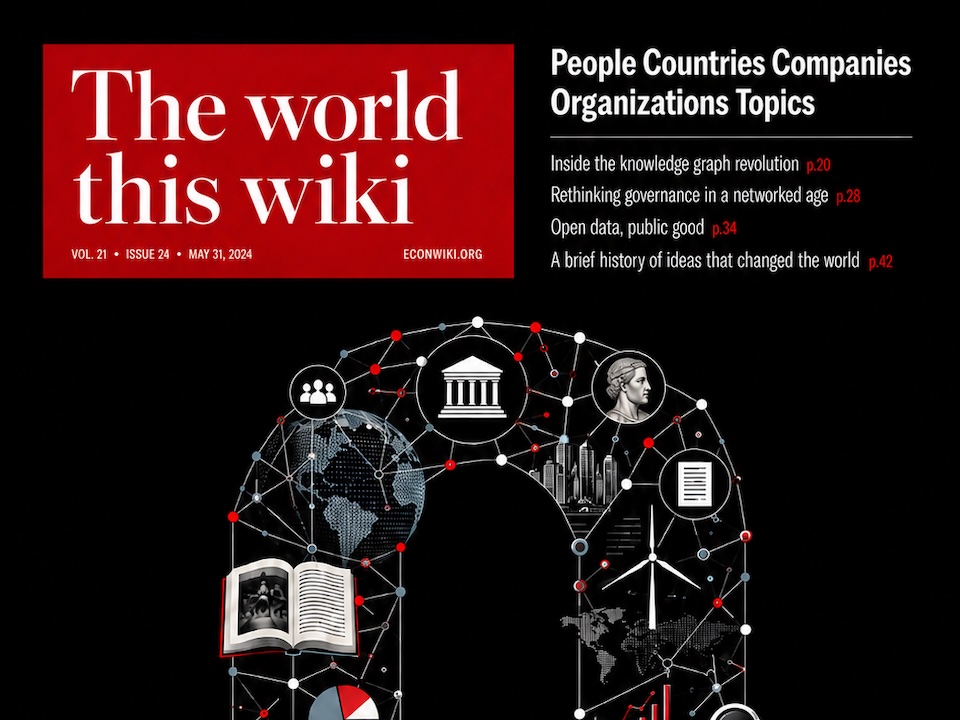
The idea of LLM Wiki applied to a year of the Economist. Have an LLM keep a wiki up-to-date about companies, people & countries while reading through all articles of the economist from Q2 2025 until Q2 2026.
I wrote a book for O'Reilly about Machine Learning. It will teach you a wide range of techniques, using projects similar to the sort of thing that you can find on this website. Word2Vec, GANs, music analysis. You should buy it! Oh and all the code is on GitHub.
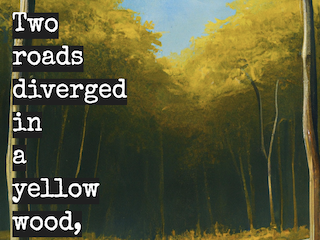
Based on OpenAIs DALL-E-2, The AI not taken generates illustrations for well known poems. For each poem there is an associated artist (usually from the same time, maybe same style) that is used to create an image in that style matching each line of the poem.
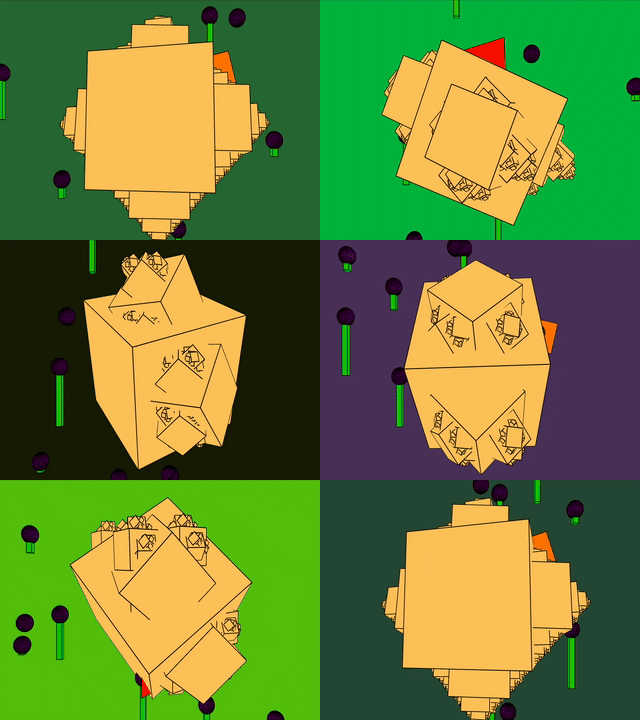
Start from a simple square and follow different evolutionary paths to create a complex animation. Each step the AI will create a new animation based on the previous one and your prompt.

An MCP server that lets AI agents like Goose publish static websites as Tor hidden services (.onion sites)
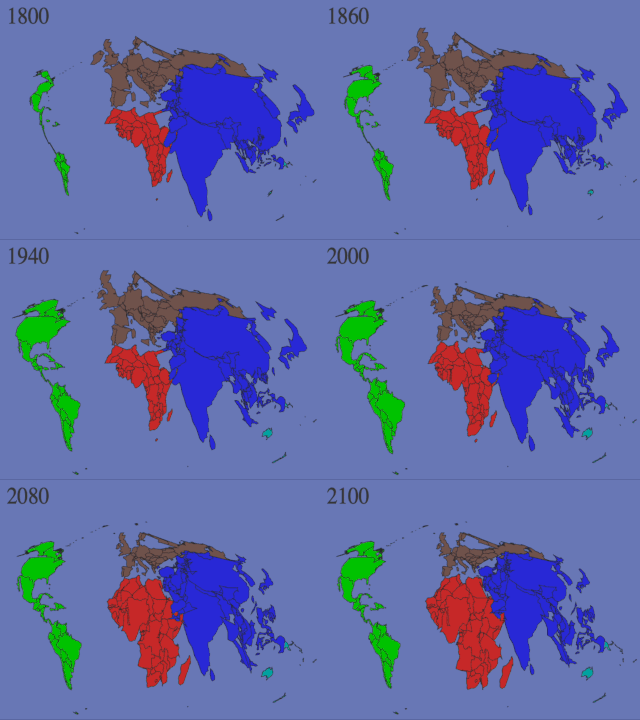
Inspired by Gapminder, this shows the population of the countries of the world by morphing their shapes from 1800 to 2100.
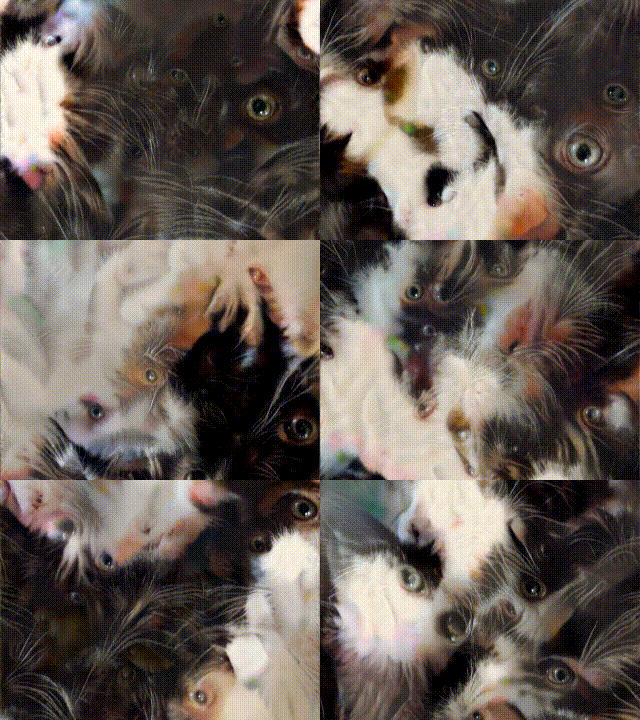
Gramzoom uses the key element of the Style Tranfer Algorithm to create an infinitely zoomable movie from any image. It works best with images that are self similar, but anything will really do. Can cats look evil? It might just break the Internet.
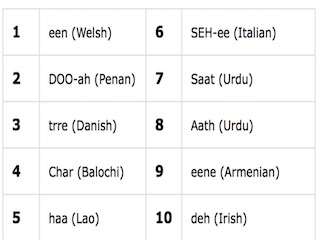
Create universal numbers by comparing the edit distance between all numbers from Wikitravel's phrasebooks and for each picking the 'median' one. As a side effect, create a tree an evolutionary tree.
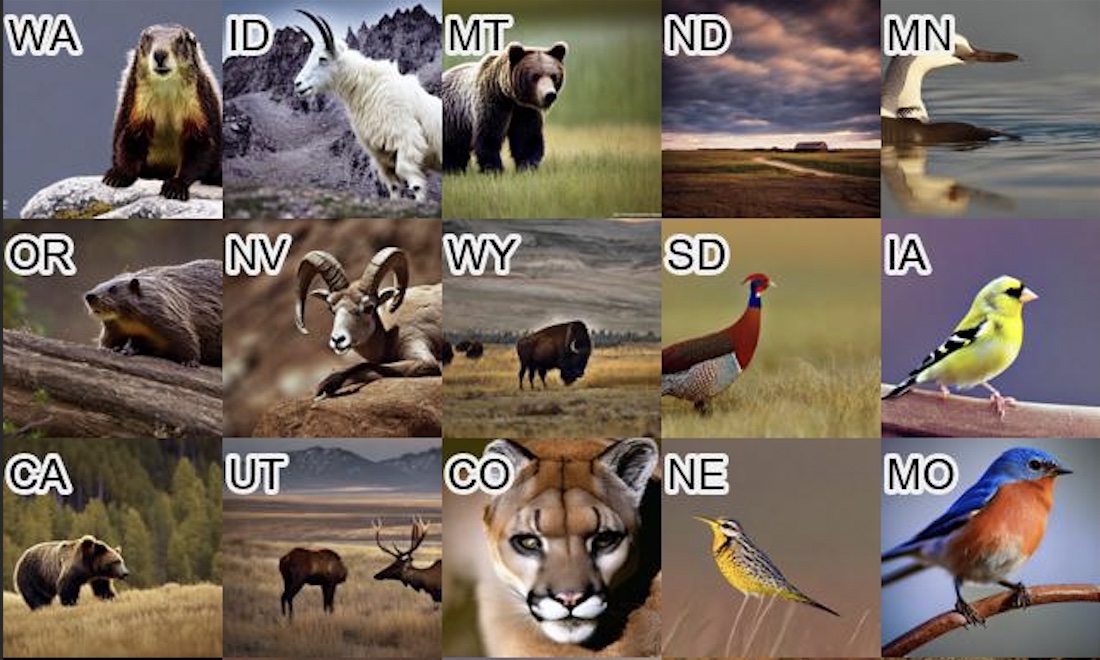
Generated using stable diffusion, here we have the states and DC each represented by an image of their state animals. Another historical example of how revolutionary this was at the time and now trivial for anybody with access to their favorite chatbot.
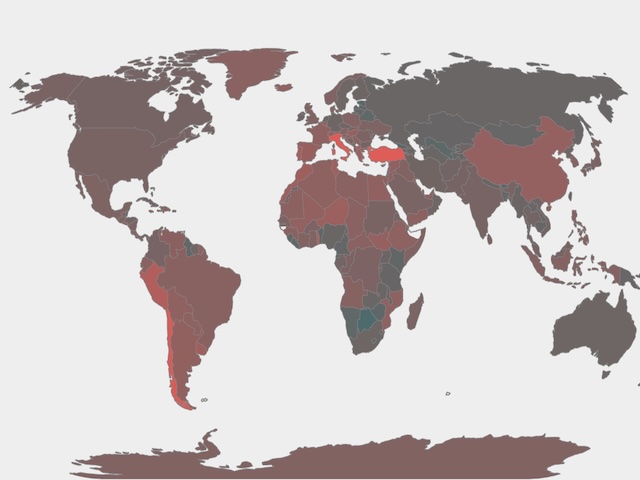
Color a world or US map by how semantically close a word is to each country (or state) name. Built on Google News Word2Vec. The geography of meaning ends up remarkably readable: "vodka" lights up Eastern Europe, "desert" the dry bits of the planet.
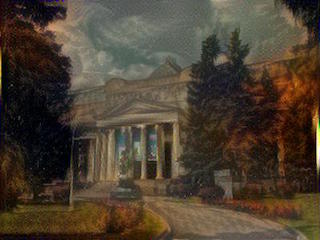
Using the Artistic Style algorithm to restyle pictures of museums in the style of their most famous painting. This way you get immediately an idea of what to expect at these museums. Uses data from Wikipedia, Wikidata andthe Wikistats. Uses Anish Athalye Tensorflow implementation
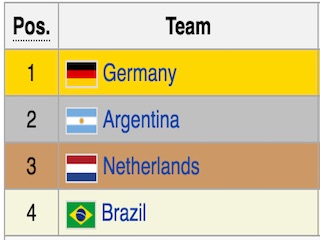
Monte Carlo tournament simulator. Reads pre-tournament ELO ratings scraped from eloratings.net and runs 10,000 simulations of the groups and bracket, with controls for home advantage, recent form, ELO strength, and late-round effects. Edit ratings, fix match scores, tune the model, and backtest it against past World Cups and Euros to see how the probabilities shift.
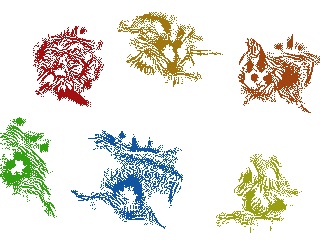
An implementation of deep dreaming where the network is restricted to just black and white and starts with a blob in the middle. It forces it to draw from the center and create ink like patterns.
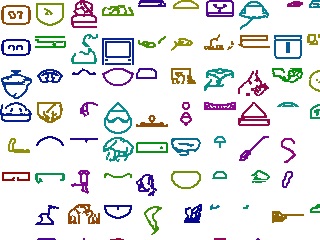
Using Recurrent Neural Networks to generate Icons and Hieroglyphs. The icons are encoded in a machine learnable format.
An implementation of a Spotify-like song radio based on Word2Vec. Based on a large set of crawled playlists and using those playlists as sentence equivalents. The Word2Vec algorithm then produces a vector per song.
This project uses the twitter api to automatically generate tweets based on what is commonly tweeted. It listens to the general tweetstream and captures fragments. By randomly recombining those fragments something that reads almost like real tweets appears. It also gives an interesting insight into what the average user uses twitter for.
Miller's Slogan: Lose a few, lose a few.